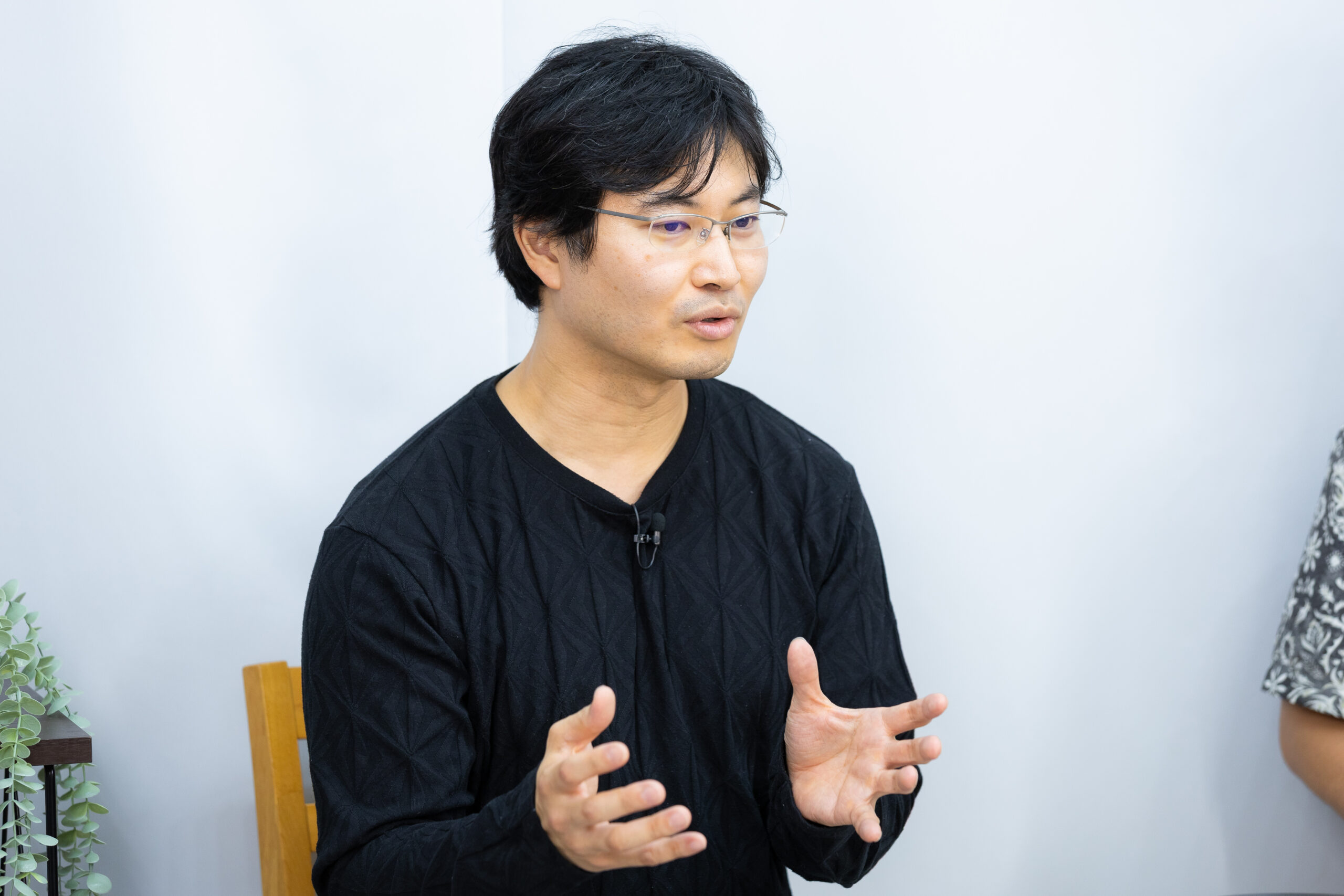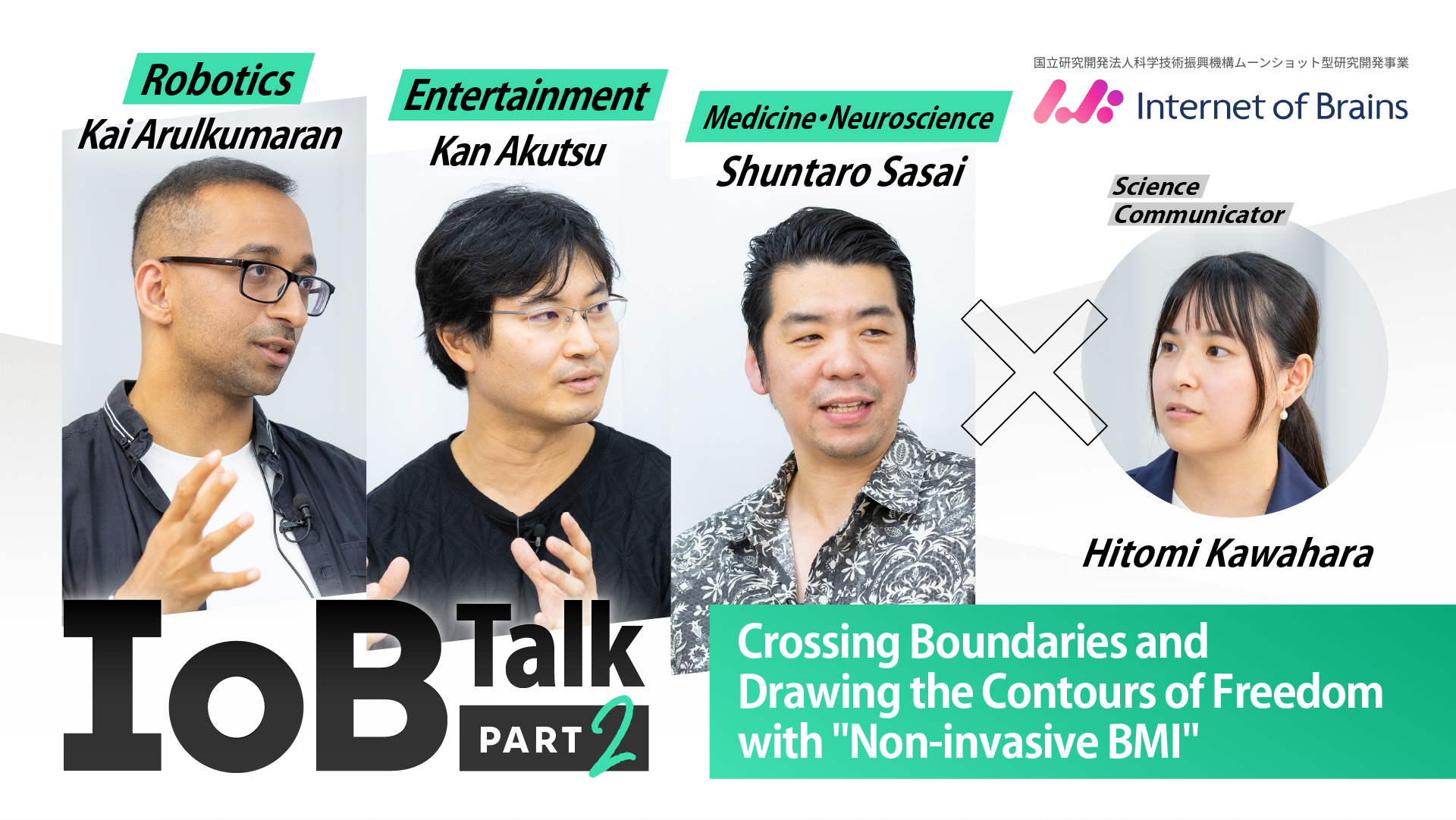
Medicine & Neuroscience – Shuntaro Sasai
CRO and Director of R&D Department, Araya Inc.
Responsible for decoding words using non-invasive BMI. Influenced sci-fi work: “The Matrix.”
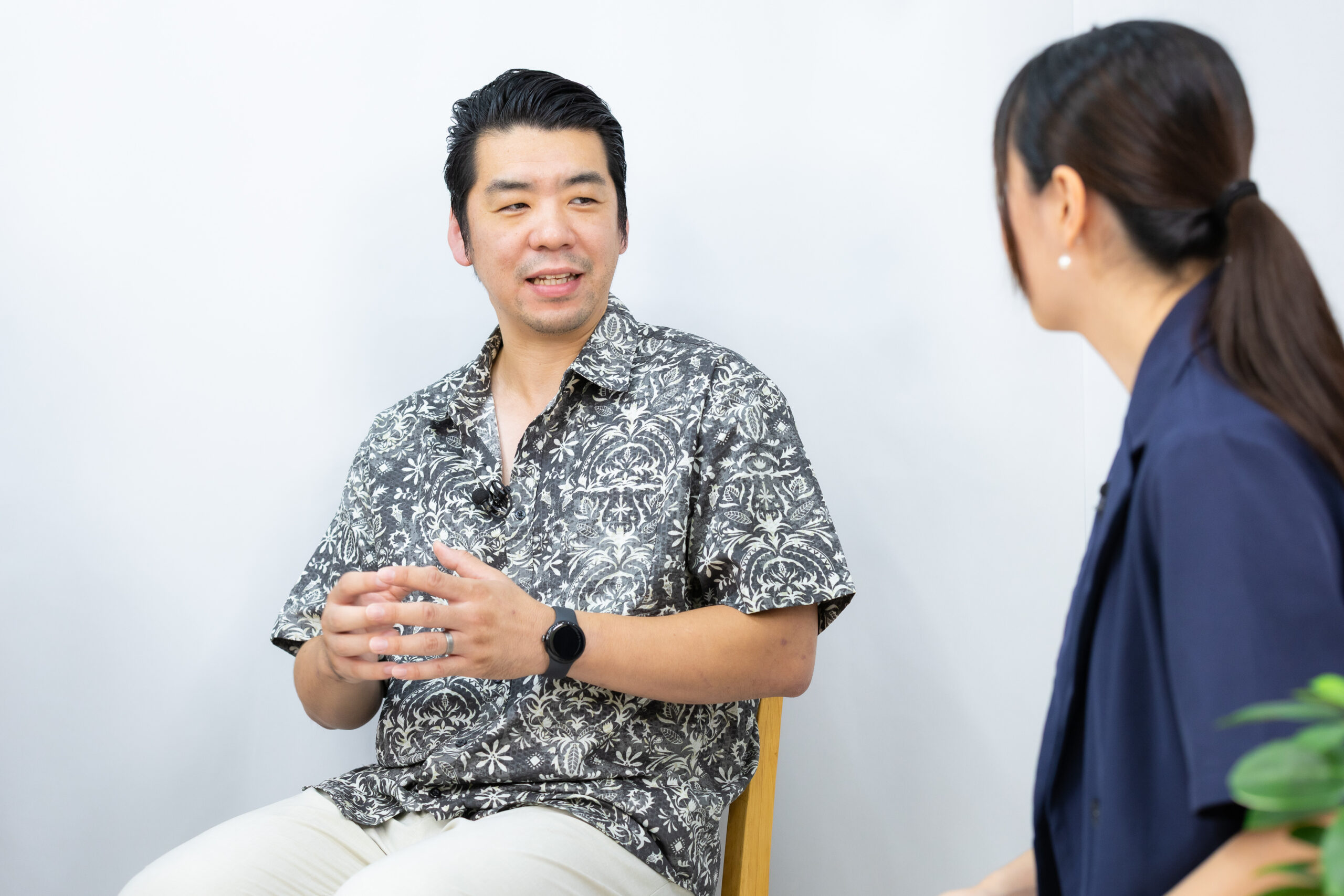
Entertainment – Kan Akutsu
Research Team Lead, MultiSense Foundation Team, R&D Department, Araya Inc.
Responsible for building a common platform for BMI. Influenced sci-fi work: “Sword Art Online.”
Robotics – Kai Arulkumaran
Visiting Researcher (Former Team Lead), Reinforcement Learning Team, R&D Department, Araya Inc.
Responsible for developing a BMI-powered assistive robot. Influenced sci-fi work: “Ghost in the Shell.”
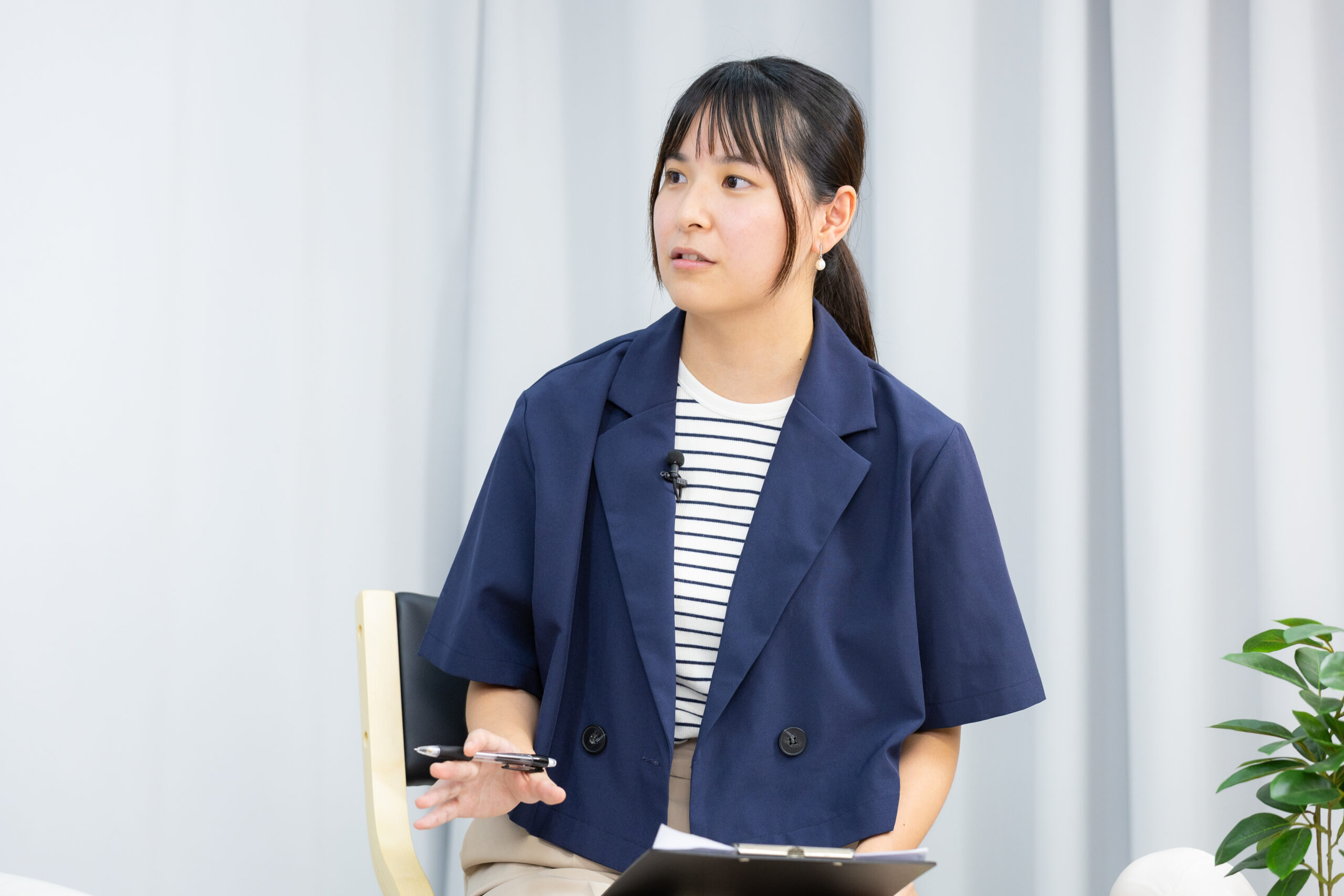
Interviewer: Hitomi (Kawahara) Mottion
Science Communicator, Araya Inc.
<Interview conducted at a studio in Akihabara, Tokyo>
|
Kawahara |
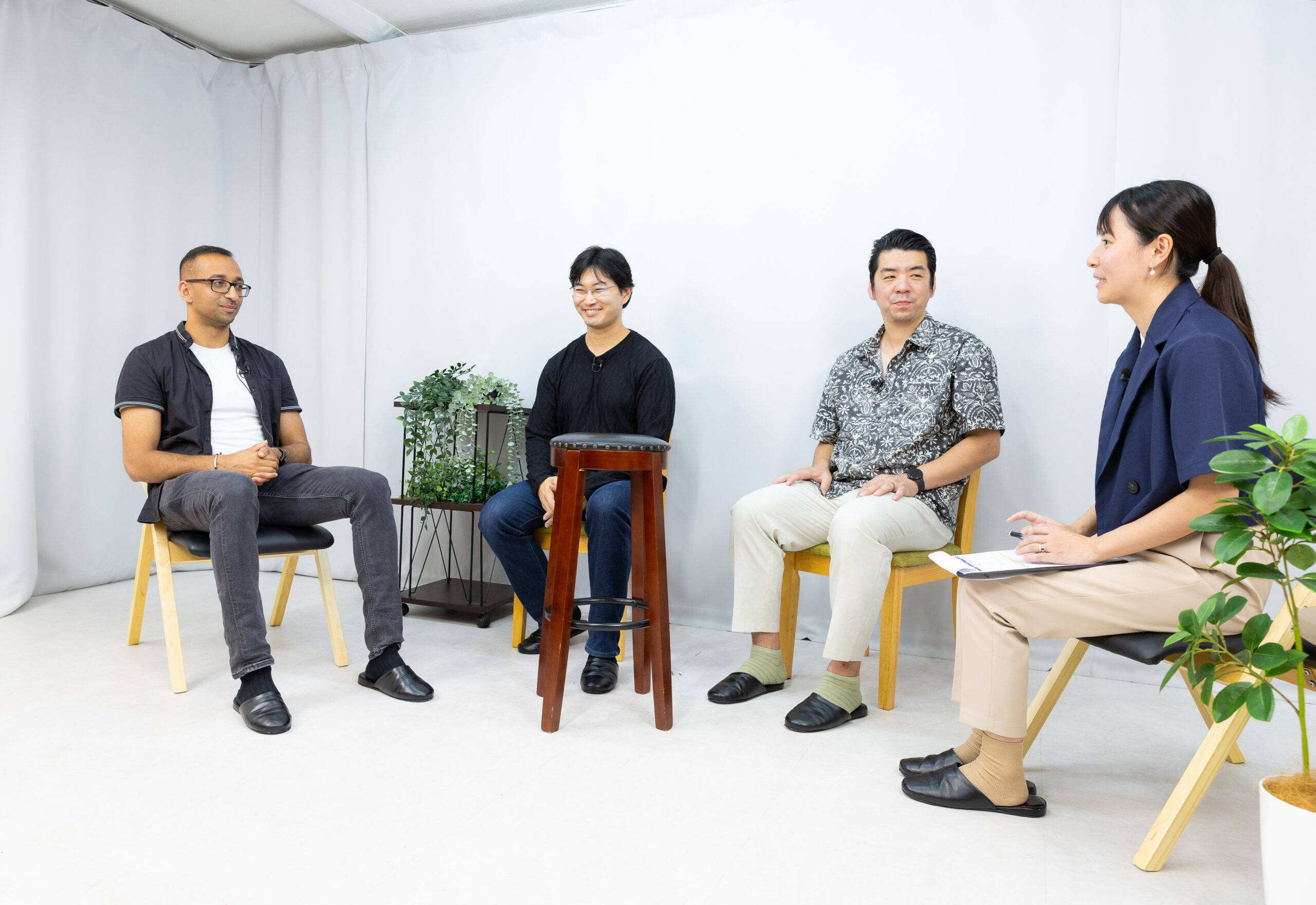
Today, we welcome three guests conducting research on non-invasive BMI under the Moonshot Goal 1 Kanai Project “Internet of Brains (IoB).” First, could you tell us what “BMI” refers to? |
|
Akutsu |
BMI stands for “Brain Machine Interface.” Literally, it is an interface that connects the brain and machines. It is a technology full of potential that can be used bidirectionally: outputting signals from the brain to operate a robot, or inputting something into the brain to induce a change. |
|
|
|
|
Kawahara |
Could you tell us about the advantages and disadvantages of the “non-invasive BMI” that you are researching? |
|
Sasai |
Unlike invasive types, the non-invasive type does not involve surgical procedures. The biggest advantage is that this lowers the physical and psychological hurdles, thereby reducing barriers to entry. However, the disadvantage is that the signal quality is overwhelmingly poorer compared to invasive types. Because we measure activity from outside the body, far from the nerves, the signals degrade due to the presence of tissues that obstruct them. |
|
|
|
Kawahara |
What approach is your team taking to overcome this poor signal quality? |
|
Sasai |
It has been said that sophisticated speech decoding is impossible with non-invasive electroencephalographs (EEGs). We tackled the theme of whether we could solve this by accumulating a vast amount of data. We revealed that, effectively, the more data you accumulate, the higher the decoding accuracy becomes. I believe this is a clever piece of research in that it opens up the possibility of avoiding invasive measurements simply by accumulating data. |
|
|
|
|
Sasai |
However, it is difficult for a patient to accumulate massive amounts of data every time they use it. Therefore, we demonstrated that if we first collect data from healthy individuals, it can be transferred to others who need it. In other words, when used by individual patients, high-accuracy decoding becomes possible with just a small amount of data collection. |
|
Kawahara |
Specifically, in what situations would this be useful? |
|
Sasai |
We showed that we could decode the words of patients with Incomplete Locked-in Syndrome—individuals whose bodies are almost completely paralyzed—by taking just a small amount of their data. |
|
Kawahara |
I heard that signal waveforms change even if the position where the EEG is taken shifts slightly. Was that also covered by the quantity of data? |
|
Sasai |
The key advantage of this approach is that by collecting a massive amount of data regardless of position, we solved both the positioning issue and the accuracy issue at once. |
|
|
|
Kawahara |
Mr. Akutsu’s team is building a BMI-CA platform to aggregate the technologies of the entire IoB project. Could you tell us what a CA (Cybernetic Avatar) is? |
|
|
|
|
Akutsu |
We call anything that a person can control a CA, whether it is a physical robot or a virtual avatar. |
|
Kawahara |
What was the motivation for creating this platform? |
|
Akutsu |
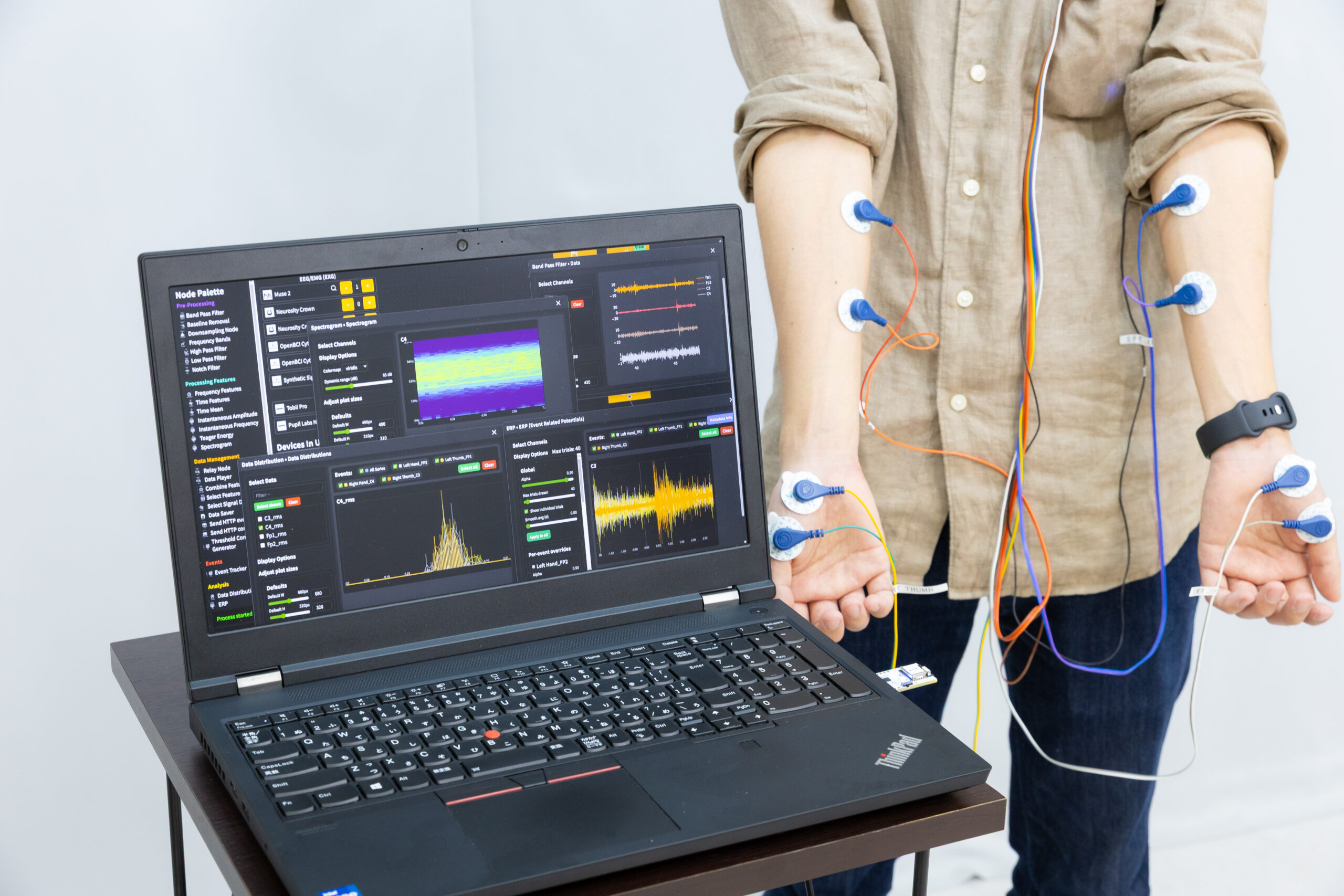
Currently, within the project as a whole, results from advanced technologies are beginning to appear individually. We felt there was a need to build a place where these technologies could be utilized in an integrated manner, rather than remaining scattered. Furthermore, we had a hypothesis that high-freedom operations, which are difficult to achieve with brainwaves alone, might become possible by combining them with other biological information such as electromyography (EMG). We are expecting the creation of such new innovations. |
|
Electrical signals obtained from muscles [Top] |
|
|
Kawahara |
I understand you aim for this to be used not just by IoB developers, but by general users as well. |
|
Akutsu |
The project’s desire is to make it usable by anyone. We are developing it so that by building logic on a platform with an interface that even an elementary school student can handle at first glance, users can operate game characters or robots exactly as they wish. |
|
Kawahara |
Recently, your team has been collaborating with the Dubai Future Foundation (DFF) in the UAE. What is the significance of this? |
|
Akutsu |
Dubai is a unique place with people from many countries, multiple languages, a proactive stance on accepting technology, and an environment conducive to proof-of-concept experiments. We are creating opportunities for the general public to learn about and experience the technology we are currently building. |
|
Kawahara |
Having a place for proof-of-concept experiments is crucial for research, isn’t it? |
|
Sasai |
Since we are building a BMI “interface,” we believe that having a place where people can actually use it and provide feedback is extremely important. |
|
|
|
|
|
|
Kawahara |
What kind of support does your “Assistive Kitchen Environment” project aim to provide? |
|
Kai |
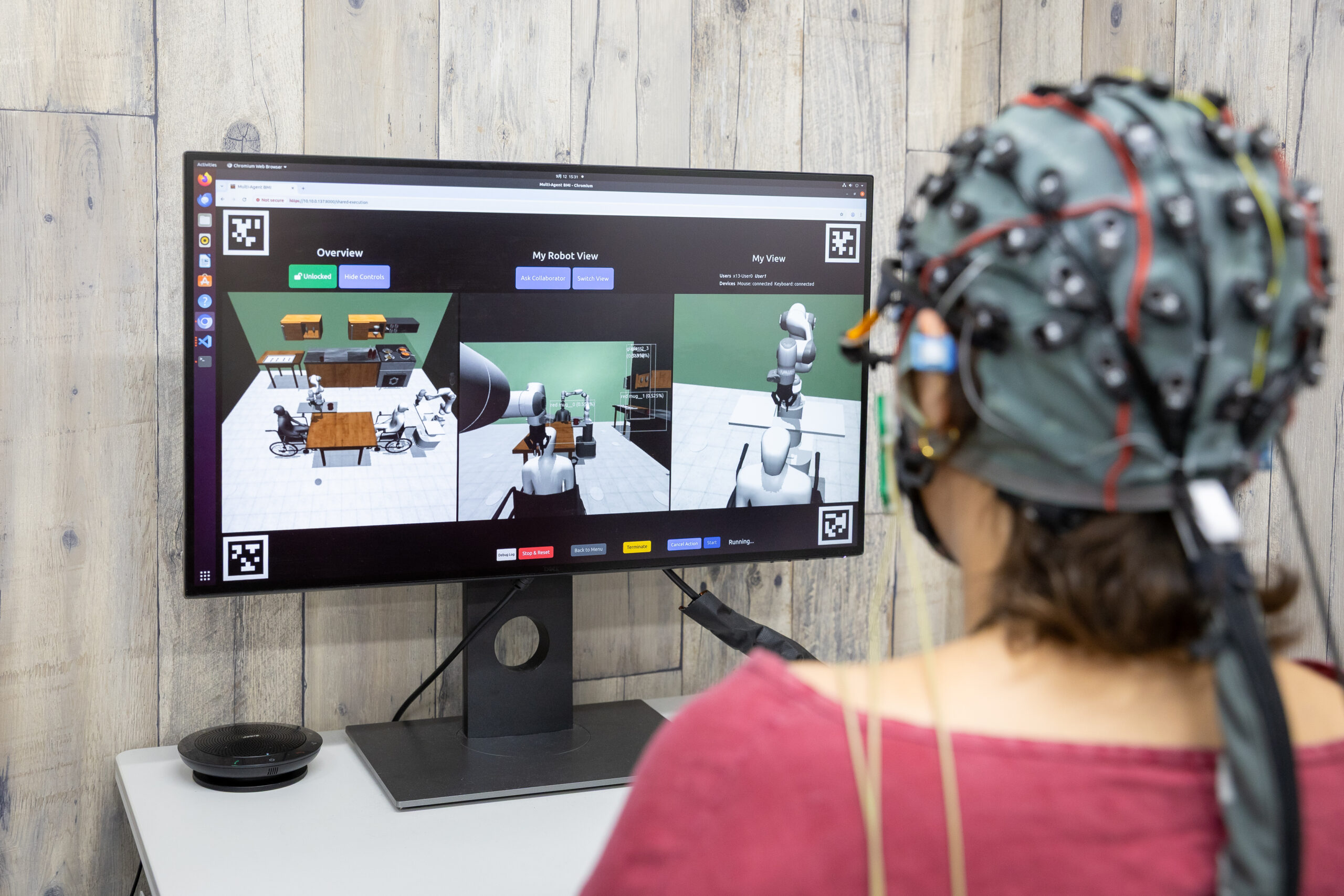
In this project, we simulate a home kitchen environment, placing tables, chairs, cupboards, cups, food, and people within the simulation. In this setting, individuals with physical disabilities can operate assistive robots using their brainwaves and eye gaze—simply by “looking at target objects” and “thinking about what they want to do.” We aim for a system that can handle not just specific tasks like “cooking a meal” or “carrying a meal,” but eventually all the various tasks of daily life. |
|
Experimental scene of the “Assistive Kitchen Environment” |
|
|
Kawahara |
Why did you adopt a “multi-user system” where one robot is operated simultaneously by multiple users, rather than one robot per person? |
|
Kai |
What we learned through this research is that people are not simply seeking assistance. In addition to daily life support, they have a desire to be part of society, to communicate with friends and family, and furthermore, to contribute to society. |
|
|
|
|
Kai |
We research the communication between human brains and robots, but the actual goal is to utilize BMI to support “communication between people.” |
|
|
|
Kawahara |
Please describe in one sentence what kind of society you would like to see when BMI becomes widely used. |
|
Kai |
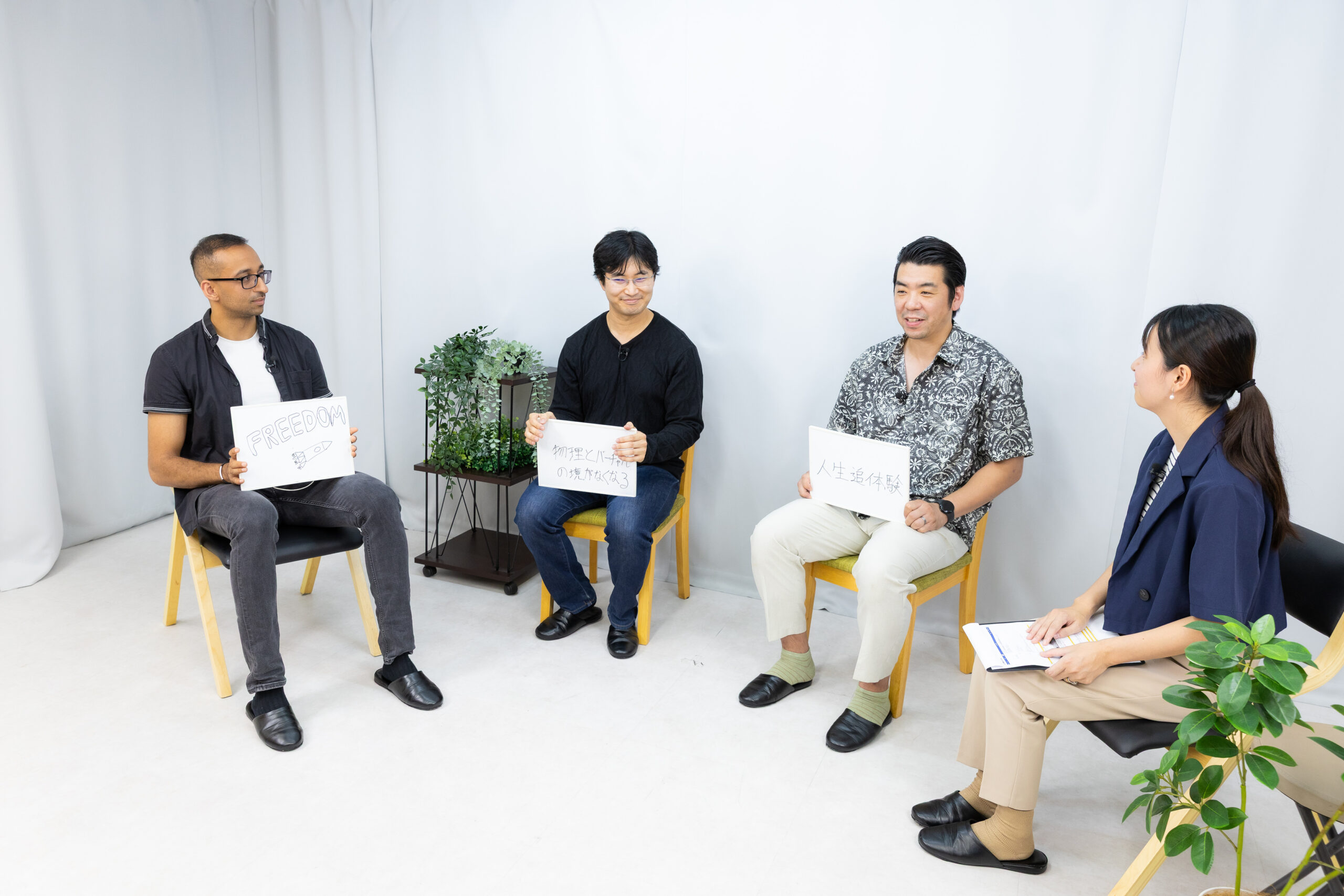
Like the world of “Ghost in the Shell,” the sci-fi work that influenced me, I hope that the spread of this technology will realize “Freedom.” For example, just as the invention of glasses allowed people with poor vision to see as well as those with good vision, future BMI technology will likely allow everyone to extend their capabilities beyond traditional human limits. |
|
Akutsu |
As someone who loves games, I wrote that “The boundary between the physical and virtual worlds will disappear.” If the distinction between physical space and virtual space vanishes, and people are no longer bound by differences in body type, age, or gender, I believe an environment will emerge where people can express their true selves wherever they are. |
|
Sasai |
I expressed it with the phrase “Re-experiencing Life.” If we automatically record what we thought at specific moments from brainwaves, we can create something like a “Life Album.” By sharing this with others, instead of just sharing superficial information like photos or short texts as we do now, we will be able to share our inner voices and emotions, potentially leading to a richer life. |
|
|
|
|
|
|
Kawahara |
If we become able to re-experience memories and emotions, there is a concern that “information we don’t want known might be revealed.” How do you view this point? |
|
Sasai |
There is a fear regarding information one wishes to keep private, but I think it’s fine as long as the sharing can be controlled. Just like Facebook’s “not shared unless you are friends” system, by installing sharing control functions within the BMI infrastructure, we aim to achieve deep sharing while maintaining personal boundaries. |
|
Akutsu |
I think it’s best for new technologies to start with light experiences, like doing something incredibly fun in entertainment. That way, the initial hurdle is lowered. If people make a truly free choice and decide to use it more because they think it’s good, that is ideal. If it permeates gradually in a form where there is no pressure to adopt it, I believe resistance will decrease. |
|
Kai |
Japanese sci-fi works have depicted worlds that make us think, “I want to see a future like this.” That is why I believe we have a responsibility to continue stimulating the next generation by proposing new technologies so they feel that “if we make the effort, the future will open up.” |
|
Sasai |
Our non-invasive BMI team is proceeding with research aiming for comprehensive social implementation, including building platforms like this, collecting data, and developing applications. Also, through an initiative called “Neu World,” we intend to advance research while paying attention to ethical aspects, ensuring that no one is left behind. |
|
|
|
|
IoB researchers discuss the new resolution of “Freedom” expanded by non-invasive BMI. Please check the main video for the full picture of the grand future map they are drawing, including further applications and a collaborative vision utilizing the common platform. (YouTube link)Talk by IoB Non-Invasive BMI Developers Writing and Video Editing by Space-Time Inc. |
|